Author: gardener

  • Update on concerns over safety of southern boundary (Yarborough Rd) walls.

    Update on concerns over safety of southern boundary (Yarborough Rd) walls.

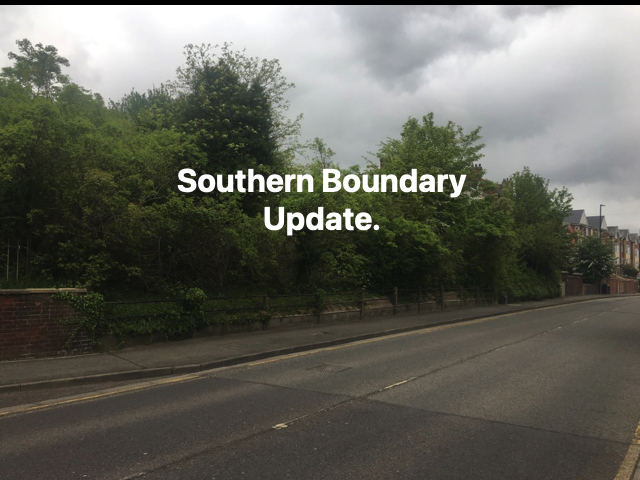
    We thought it worthwhile updating everyone on the status of the Southern boundary (Yarborough Rd) walls.

    In case you weren’t aware, we have two separate issues associated with this boundary which we raised / discussed at the last AGM. Both are considered to be potential safety and financial risks to the park.

    Issue 1 – Is associated with the section of low concrete post and metal railings in the Southeast corner (an approximate 20-meter length). These railings have been gradually moving out over the pavement for many years, however over the last 12 – 18 months the lean has become notably worse, with more concrete posts cracking. Last year we instigated a surveyor’s report which recommended we removed the trees overhanging the boundary and also the brush / saplings behind this section, whilst obtaining quotes to remedy the situation, potentially digging out and building a low semi-retaining structure. We have been in touch with several companies and are still awaiting more detailed costings. Quotations have been delayed somewhat due to the two separate issues being looked at together. In the meantime we have cleared the brush / saplings (once, so far!) and most of the trees. Two larger trees remain, which we hope to remove in early winter.

    Low Concrete Post & Rail Wall

    Issue 2 – Is associated with the Bus stop wall. The cracks and movement in the brickwork have become noticeably worse over the last year. The surveyors report thought this was possibly due the brick façade coming away from the retaining concrete wall, potentially due to incorrect expansion gap material. Unfortunately, in just the last few weeks, a more detailed investigation has shown the movement and cracks have been caused by the main structural concrete retaining wall (behind the bricks) cracking and moving forward. This is obviously much more serious, and no doubt will be extremely expensive to repair. We are currently in the process of obtaining quotes for a more detailed Structural Engineers report, which should provide a clearer indication of the status of the movement and the work / options required to remedy the situation.

    If anyone has any photographs of when this wall was originally built (when the bus stop was created), either before, during, after and / or knows the date it was built, we would be interested to hear from you.

    Bus Stop Wall

    Once we have a clear solution and understand required timescales we will start the necessary fundraising to complete the works required. In the meantime we will keep everyone informed as necessary.
  • A First for Park & Lincolnshire

    A First for Park & Lincolnshire

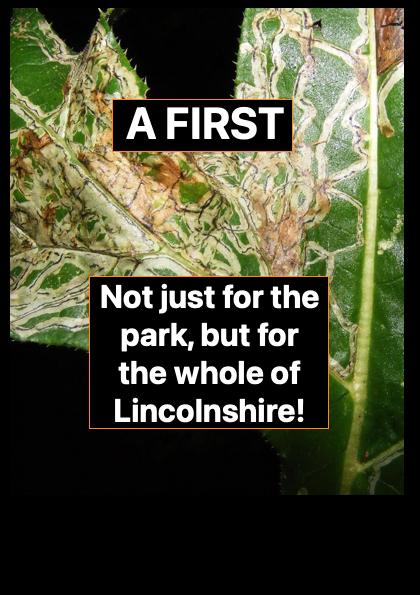
    A very small leaf mining fly (Phytomyza bipunctata) has been spotted in the park by a recent visitor (Graeme Davis) who suspected it was a rare find. When Graeme sent the photos to the national recording scheme they not only confirmed it was the first ever recording in Lincoln but also for the whole of Lincolnshire.

    The full transcript of Graeme’s correspondence can be seen below;

    When in Lincoln I decided to look at a lovely green space called Liquorice Park, managed by a community group for the benefit of people and wildlife. The park was buzzing with wildlife in the summer heat from butterflies and day time moths to large dragonflies. Passing a patch of Globe thistles (Echinops species) in a planted flower bed I was distracted by the buzzing bees. Then something caught my eye. Tiny, intricate lines wiggling their way across just a few of the plants leaves.

    I immediately recognised it as a agrozmid fly.. or as I like to call them vegetarian flies. These flies are not often seen as adults and are known for their larvae creating tiny corridors or mines within the leaves of their specific host plants. The fly in question was Phytomyza bipunctata, one I have seen before. I nearly dismissed it, but got a record pic just incase, not realising the significance of my find. The mines are normally found June- October in gardens where globe thistle is present. It is widespread in Europe, but in the U.K. was previously restricted to London, Surrey, Berkshire and SW Yorkshire.(info from https://agromyzidae.co.uk/)

    I returned home, downloaded my records and submitted them to the agrozmid recording scheme (details below). Within a short period of time I received a message from the head of the recording scheme, Barry Warrington. Not new to that part of Lincoln as I suspected, not just new to Lincoln, but actually a new species record for the WHOLE of Lincolnshire. I was amazed. A great record of a fly whose distribution is increasing. As this group of flies are largely under-recorded (though this is changing), it is often hard to understand the increase at this time. It is likely the fly is increasing moving further north with climate change. However, as its host is a garden plant, Globe Thistle, it could also be that it is travelling with its host plant. As more people help to add recording to the national agrozmid scheme, the clearer picture we will have.

    Why are these flies important? The biggest one is quite simply food. Birds, especially tits have worked out where the larvae of these little flies hide within the leaves and a substantial amount of them are predated by them. They can also be used as an indicator of the environment being that some are very host specific… so next time you see an imperfection on a plant leaf, pay it a little more attention.

    Graeme Davis

    More info on agrozmidae can be found on this amazing sites: https://agromyzidae.co.uk/

    Also, British Leafminers- http://www.leafmines.co.uk/

    And… U.K. Fly mines – http://www.ukflymines.co.uk/index.php by the late Brian Pitkin

  • SAD NEWS – RECENT VANDALISM

    The Trustees are sad to have to report a recent spate of incidents, within the park, which have caused much anger and disbelief. On the evening/night of Weds 6th July a saw was used to cut off five branches from one of the oaks behind the herb garden. Apart from obviously damaging the tree, the fallen branches and the activity in the area also caused damage to other plants, in particular the Stumpery. In another part of the park one of the benches had part of the back support sawn off. We can’t help but think these incidents were related? To round it all off one of the bins was emptied and used for a fire, although none of the cut wood was used!

    If anyone saw or heard anything, or finds a saw thrown away in or near the park, can you please contact one of the trustees or message this site.

    We have cleared the litter and moved the cut branches, as well as tidying up the tree itself. We will  repair the bench in due course. Rest assured the Trustees are determined not to let a mindless minority discourage us from the great work being done by the volunteers to maintain the park.

    Photos and video below

    VIDEO OF DAMAGED TREE
  • LIQUORICE ALLSORTS

    LIQUORICE ALLSORTS

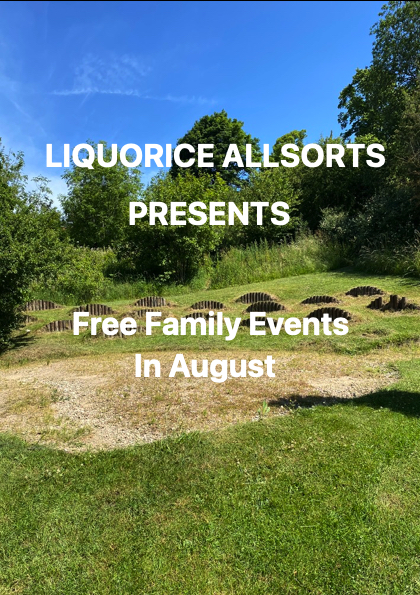
    Under the heading of Liquorice Allsorts, one of our local residents and volunteers (John) is planning a series of three free family events in the Park this August. Events consist of two book reading sessions, on Sat 6th &  Sat 20th of August and a musical play on Sat 13th August called “The Water of Life”. Please see flyers below for more details.

    John would very much like some help. In particular he needs a musician for the play along with participating families and individuals to assist with meeting and greeting. If you can help and / or wish to participate please contact John on 01522 510004 or 07986668977

  • Spring Project – Scented Garden

    Spring Project – Scented Garden

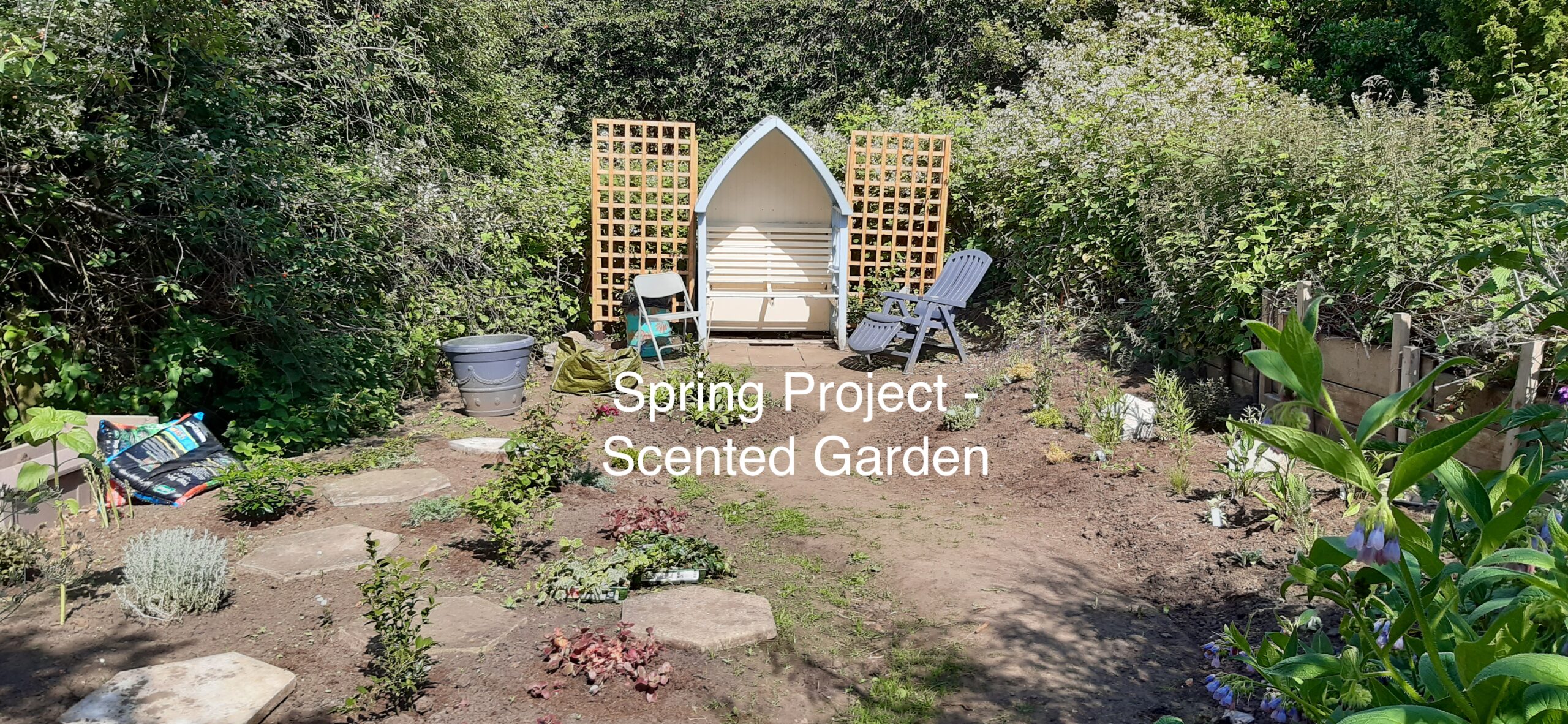
    The volunteers have been busy this spring creating a new garden for you to visit.   Opposite the herb garden is a small secluded site which has been cleared of brambles, weeds and rubble.  The area has been dug over and planted with scented evergreen shrubs and herbaceous perennials.  The herbaceous perennials on the right-hand side border, looking from the entrance, have been chosen to attract wildlife. We are hoping to see more butterflies visiting.  The area is very sheltered so the scents from the flowering shrubs on the left-hand side of the entrance such as rose, jasmine, philadelphus, osmanthus, winter honeysuckle (to name a few) will hopefully linger. It’s still a work in progress with the paths to be completed but we do hope you come and visit soon to sit and enjoy the emerging garden. We have named the area Miss Rose’s Garden.

    New Scented Garden – Planting complete, paths to be finished.